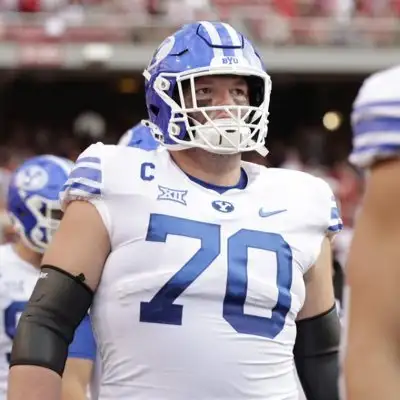
Jethro: everybody to a
decade, never to be forgotten.
We are on year two with Connor
Pay the, uh, former BYU center.
And, we're gonna follow his
journey over the next 10 years.
Uh, well nine years now about what
is life is like and how this is the
best decade that he has ever had.
So we're excited for this conversation.
And, uh, also if you want to keep
track of your own 10 years, uh,
that will never be forgotten.
You can do that through a little
web app that I made as part of this.
It's a little daily journal.
You ask, you answer this same
question each day of the year
while different, I messed that up.
Each day you answer a question and
then it repeats the following year.
So you get to see how your
perspective and ideas have changed.
Around 366 questions all organized
around 13 different categories
over the course of the year.
It's a pretty cool little thing.
Short answers.
Don't write a paragraph or
a novel every single day.
Just do a little bit.
You can check that out at a decade.
Never to be forgotten.com and
click on journal up at the top.
But today we've got Connor.
Here.
Connor, welcome.
So good to see you again, man.
Thanks for the time.
Connor Pay: Yeah, thanks for, uh,
thanks for doing this and being
willing to have me on again and dealing
with my nightmare of a schedule and
Jethro: Yeah,
Connor Pay: making it work so.
Jethro: know.
I mean that's, that's how it goes.
Uh, I believe one of your texts to me was.
Man, the transfer portal is
crazy and I just can't right now.
And
Connor Pay: Yeah.
Jethro: that, uh, that sums up
things a little bit, but, but let's
back up a little bit because, uh,
last year when we ended, you were
saying, I'm now a professional
athlete and I'm gonna go to the NFL.
And unfortunately that didn't happen.
Talk to us about that process and
Connor Pay: Yeah.
Jethro: how you dealt with that.
We've all lost jobs or not gotten the
job we wanted before, but you're in a
different situation because everybody
saw that you didn't get this job that
you were working really hard to get.
So talk
Connor Pay: Right.
Jethro: that.
Connor Pay: Yeah.
I think, um, if I remember right, when
we did this last time, I was in Georgia
doing, doing my pre-draft training.
Um, and so when I, when I came
back from that, I, I went down to
Texas and did the Big 12 pro day.
Um, and, and did pretty, pretty well.
I was o overall I was pretty happy with
how it went and had some great interviews
with teams and things like that and come
back and, uh, there's a few weeks between
Pro Day and the draft and you know, you're
just getting phone calls, doing a few more
interviews with teams and stuff like that.
And then, then the draft weekend comes
and I kind of knew with where I stood
that free agency was my most likely
route that I probably would go undrafted.
But if, if something crazy happened
like the seventh round, maybe the
sixth was the highest I'd ever go.
Um, and usually when you get to the
third or the fourth round of the NFL
draft, that's when teams start calling
around about priority free agents.
Um, and so e even as early as the,
as the third and fourth round,
they're already thinking about who
they're gonna be able to get, um,
for cheaper, uh, as free agents.
You know, guys who they
don't project to be drafted.
And so my agent calls me, um, in the
fourth round and basically says, Hey,
we've got, we've got three or four teams
in a bidding war for you essentially
to come and be a priority free agent.
Um, and I said, okay, great.
And so we're just talking with him.
We're, we're driving up the
guaranteed money, things like that.
And I was like, okay, not a bad spot
to be in, you know, and, uh, uh, but
you know, the draft is different every
single year in terms of how many players
are taken at your position or not taken.
And yeah, this was the third or fourth
round and only only two or three centers
had been drafted so far in that draft.
So there were still a lot of
guys ranked higher than me.
On the board.
And normally eight 10
centers are drafted per year.
Um, and not a single other center was
drafted for the rest of the draft.
And so only three were taken, um, if
I remember right, three, maybe four,
uh, but I'm pretty sure it was three.
And so now all of a sudden, the free
agent market is super saturated with
guys who were ranked higher than me.
Um, and so those teams went dark.
Uh, they did, stopped responding
to my agent 'cause they had
better options out there.
And, um, I ended up not getting, you
know, signed, uh, as a free agent
like I had hoped, and got what's
called a, a mini camp invite instead.
Um.
And which is basically you go to, you go
to rookie mini camp, which is a, a part of
OTAs, um, which is part of the OTA block.
It's like a six week block for most teams.
And rookie mini camp is really just
one week into the weekend of that.
And so I optional team activities.
Yep.
And, and so, you know, the, the veterans,
the guys who have been there 7, 8, 9
years probably don't do a ton during OTAs.
They'll come around a lobby, be around the
team, work out, some of 'em don't show up
to it at all and usually get, get fined.
But they make enough,
Jethro: and they still
Connor Pay: yeah.
They make, they make enough money
where it's like, oh, you're gonna
find me a hundred grand for not
coming to OTAs, whatever, you know?
Yeah.
I'm gonna go train on
my own somewhere else.
And so, uh, so I get invited
to the Seattle Seahawks.
Um, and so I, I fly down to
Seattle, um, and join the
team there, uh, for mini camp.
And, um, felt like I did pretty solid.
Uh, but you know, it just,
it's, it truly is a business.
The, the NFL is less about talent
and more about your situation, right.
And perceived perceived value.
Um, because, you know, there was,
there was a, another C center
taken in free agency before me.
Um, you know, so we were both rookies
coming in together and they had
paid him a lot more money than me.
And so, naturally, even if, and if I
performed better or he, uh, performed
worse than me, they're gonna give
him a longer leash and cut me loose
and keep him around more likely
because they've invested more money
Jethro: Yeah.
Connor Pay: him.
And that's, that's why it's so
important when you can to get drafted
Jethro: Yeah,
Connor Pay: because the team has
some skin in the game for you.
Where it's like for me and all the
other, uh, mini camp guys who were there.
You know, the, the team doesn't have
a, you have to do something pretty
amazing to get them to keep you.
Jethro: Yeah.
Connor Pay: Um, and they don't, they
don't have much skin in the game.
So I, I go through my practices
that week, go through meetings,
feel like I'm doing well.
And then, you know, you come in, you
come in after, uh, after practice one
day at the end of mini camp, and you
have a piece of paper in your locker with
your flight itinerary home for the next
morning, you know, and it's just a, yep.
Nobody talks to you.
You just, you get shuttled back to the
team hotel and they say, okay, the shuttle
leaves at this time to take you to the
airport, you know, and you head back home.
And so that's what happened to me.
And, um, so flew back home from Seattle,
was here for a week and then got
picked up, uh, actually by the Raiders.
So got another chance at the Raiders.
Um, during their mini camp
and, uh, similar situation, uh,
felt like I honestly had done
really well at the Raiders.
I had known Chip Kelly from high
school recruiting and he recruited
my brother and he was the OC there.
So got to go, go spend a couple weeks
in Vegas practicing with them and,
you know, gotta meet guys like Max
Crosby and, and some of the other
dudes who were there at the facility.
And, uh, um, you know, gotta be coached by
Pete Carroll, who obviously was a legend.
Jethro: Yeah.
That's pretty amazing.
Connor Pay: and so that was, that was a
fun experience, but very similar thing.
They were, the Raiders were a lot more
communicative with me versus the Seahawks.
And so they let me know like, Hey, uh, hey
man, we, we felt like you performed well.
We just don't have a spot for you.
And, uh, they have a lot of money
tied up on their Interior O line.
They have some really good players
and, you know, they got, they
got some 10, $15 million guys.
Uh, and so they just
didn't have the spots.
And I was like, you know
what, I'm, I get it.
I'm, I'm, I'm, uh, I'm smart enough to
know that this is a business and you
guys have to make business decisions.
And so ended up getting cut, uh, from
the Raiders at a mini camp as well.
And so came back, uh, and
um, you know, obviously
pretty tough.
'cause if you don't make it out of those
mini camps, then there's a pretty slim
chance that you're gonna be invited
back for training camp where you get
to go and, uh, actually practice in
pads and play in preseason games.
Get NFL tape, which is the biggest
thing for, uh, elongating your
career, is that those, that preseason
film, uh, you really need that.
And unfortunately, you know, there,
there were a few times where some guys
went down in Seattle, um, and that I
was, I was very close to being called
back to their training camp where my
agent called me and said, Hey, be ready.
They've had some injuries, uh, but
it just never ended up happening.
And so, uh, went throughout that
entire season, still training.
I got calls from teams every single
week, the entire season, um, and had
flights booked a few times that ended
up getting, getting canceled, you know,
'cause the team changed their mind or
they ended up taking someone from a
different position instead where they
felt like there was a greater need.
You know, those kind of things.
Um, so yeah, it got, it was a little
bit discouraging at times, you know,
just kind of the back and forth.
You're getting yanked back and forth.
It may happen.
No, it's not happening.
It's gonna happen.
Yeah.
Psych, it's not happening, you know,
and so it's, uh, it was mentally,
it was a little bit of a roller
coaster, but I think the thing
that hurt the most is I didn't get
invited back for a training camp.
And so I didn't get any preseason film.
And so now trying to get picked up,
my agents out there trying to get
me picked up by a different team.
A team's gonna pick a guy who they
can actually watch play in the NFL in
the preseason almost every time before
someone who doesn't have preseason film.
And so, um, that's kind
of where it ended up.
And, uh, so that's at least
the NFL portion of it.
And then, so I, I gave it the full
season because my agent was like, look,
there's also, there's also a lot of
injuries and they have extra spots going
into the playoffs and things like that.
And so.
Um, you know, he's like, let's just, we
gotta stick it out for the entire season.
I think technically, even though I kind
of consider myself retired now from
playing, I think technically my name
is still in the NFL database as active.
But, uh, just 'cause, you know, I mean,
I still obviously I consider myself
retired from playing now, but I, I
still train and do things to try to
stay in shape and so just for life.
So, hey, you know, you never know.
I could get a call and, uh,
Jethro: know,
Connor Pay: jump back in.
You know, why not?
Jethro: Weddle got a call for, I think it
was the Chargers right before, was it The
Chargers, right before the Super Bowl.
Uh, and, and then
Connor Pay: Or the Rams.
The Rams.
Jethro: you.
I knew it
Connor Pay: Yeah.
Jethro: team.
He got a call and he was already retired
from what I understand, and like got
up off the couch and came and you've,
you've heard of that some other times.
It obviously he wa he had
played in the league for years.
Uh, so I got
Connor Pay: yeah.
Jethro: to go, to go
through with this and,
Connor Pay: Sure.
Jethro: as people are listening,
like I just want people to think
like, we all have these situations
where we think something's gonna
happen and then it doesn't.
And so like you.
So, the first one is like
a, a financial situation.
Connor Pay: Mm-hmm.
Jethro: what I understand, up
until the draft, you're paying for
everything, all your extra training
and, and everything to get ready.
You're paying for that.
And then after the draft, if you're
going to OTAs, then the teams are
paying you to come out as an employee.
Is that a fair, simplified
way of looking at that?
Connor Pay: So it depends.
Um, most guys, most guys, their agency
will pay for them to go and train.
Jethro: Okay.
Connor Pay: that's, that's kind of one
of the incentives that agents have.
Not only the prestige of the agency, but
it's like, Hey, we're gonna pay for you.
So like, my agency paid
for me to go to Atlanta.
And train.
Um, that's kind of the,
the risk and the investment
Jethro: That
Connor Pay: making in, in you.
But that doesn't happen for everybody.
Um, it depends on, you know,
your pre-draft rankings, um, and
other, other things like that.
And so, thankfully I had a number of
agencies who felt like I was ranked high
enough to where all of them offered to
pay for my training, and so I wasn't
gonna go with an agency that was unwilling
Jethro: Yeah.
Connor Pay: to pay.
Mm. And so, but yes, then you go to
mini camp and OTAs and it's either
no money or very little money.
Jethro: Uhhuh.
Connor Pay: Um, I mean, obviously
the, the team pays for you don't
pay, you don't pay the team at all.
Jethro: Yeah.
Connor Pay: So I could, at
the very minimum, it's free.
Like you don't pay for
your flights or your hotel.
The, the NFL team will pay for your
flight and your hotel and all that stuff.
Um, and so sometimes, sometimes
you'll get, uh, a small
amount to go to mini camp.
Um, but it's really, if you can stay
for, if you can get invited back
for the remainder of OTAs, then they
pay you for your time being there.
So you get compensated in that way.
And then obviously, guys who are already
signed right after the draft usually
comes with some type of a signing bonus.
If you're drafted.
The signing bonus can be
pretty big as most people know.
But as a free agent, it really varies.
Um, a large amount where sometimes there's
you, you're signed, so you get, you'll
be on the team through training camp.
Um, but sometimes there's no signing
bonus or, you know, if they felt like you
were ranked high enough, uh, or worthy
of it, then, you know, some of 'em can
be up to a hundred thousand dollars
signing bonus even for a free agent.
Jethro: yeah,
Connor Pay: you know, and so.
And, and that's where for, for a
while there, for those few rounds,
that's the bucket I thought I'd
find myself in, because that's
what my agent was working on.
Like, Hey, there's interest and so
we're gonna, because there's, there's
a signing bonus and then there's what's
fully guaranteed in your contract.
And so my agent was doing some work
to try to raise both of those things.
Not only would my signing bonus be
higher, but also my guaranteed money.
Um, and there are certain organizations
in the NFL who are known for really
taking good care of their free agents.
And you know, like I, I've had
some former teammates go to teams
like the Cowboys, where it's like,
look, even if you get cut, we're
gonna guarantee you a hundred grand
Jethro: Yeah.
Okay.
Connor Pay: just to like,
make it worth the time.
You know?
And so that's, that's
kind of how it works.
But, uh, yeah, mini camp and into
OTAs, uh, unless, unless you end up
getting invited back and staying, uh,
you don't end up making much money.
I.
Jethro: Yeah.
Yep, that makes sense.
So it's, it's one of those things where,
you know, if you do end up with a. NFL
contracts and you're on the 10 to $15
million range, like you were talking
about those guys in Oakland, then, you
know, you're, you're in good shape.
But
Connor Pay: Mm-hmm.
Jethro: whenever you're applying for
a job, you're investing time, you're
investing money, you're investing in
relationships and things like that.
Can you talk about that relationship
piece and how that either helped or
hindered or what you thought about as
you were, as you were thinking about
those relationships, like you mentioned
Coach Kelly having, uh, familiarity
with you on the recruiting trail and
Connor Pay: Yeah,
Jethro: brother.
So like how do those
relationships manifest themselves?
Do they matter?
Do they feel like they don't matter?
Like, what's your perspective on that?
Connor Pay: I, I think
they always matter and,
Jethro: can they
Connor Pay: and, uh, I don't know.
One of the things that I've always,
you know, that I was taught by my
parents and that I've always tried
to do is I've always tried to end.
End up in a positive relationship
with everybody, everybody.
But that I possibly can leave a good
impression, um, because you never, like
you said, you never know when your paths
are gonna cross again later in life.
And so it's like I had, I met Chip
Kelly one time in the recruiting process
in person and had a few phone calls
with him as we were going through it.
And yet when I show up at the
Raiders, obviously my, my younger
brother was a, a much bigger high
school recruit than I ever was.
He was one of the top
tackles in the country.
And so Coach Kelly was pushing hard
at Ohio State, um, to get him to come.
And so got to know our
family even better that way.
But it's like he remembered me, you know?
And so it's like, did it, did it
end up really making a difference,
uh, for me and making the team?
No.
But it's like now, um, and I guess I don't
even know if I've told you this Jethro,
like now, now I'm, I'm coaching at BYU.
That's one of the things that I'm doing
Jethro: Well we
Connor Pay: and
Jethro: so
Connor Pay: Yeah, yeah, yeah, yeah.
Jethro: part up.
Connor Pay: And so it's like, who knows
what's gonna happen down the line.
And that relationship that I have
with Coach Kelly, maybe it'll manifest
itself in different ways again.
'cause now he ended up getting
fired from the Raiders.
He's back at the college ranks.
Um, and so it's like you
just, you never know.
And I feel like I'm seeing that more
so now where it's the same deal.
Um, I, I got to have, uh, a one-on-one
interview with the Lions offensive line
coach in the pre-draft process, Hank
Fraley, because he had recruited me
at UCLA, um, and he had remembered me.
And so he wanted to gimme a phone
call and interview me in person
instead of having the scout do it.
You know?
And so it's, it's like little
things like that where it's like.
Again, did it make a
difference in the end?
Not exactly, but, but it could have, you
know, it de it definitely could have.
And, um, I think, and maybe we can
just in answering this question, it
might be a good transition into after
football, or I guess it was kind
of mixed into during, uh, because
relationships is where I'm at now.
It's, it's why I'm at where I'm at now,
where when I got cut from the Raiders,
I come back and I'm training every day.
So I'm at the facility, I'm around the
coaches, and I, and I really made a point
as a player to develop a relationship
with all the coaches and, um, my, my
play on the field and my dedication
to the team earned their trust.
But then also, uh, you know, just
taking the time to get to know
them, especially with Coach Kalani.
Coach Kalani and I are very close.
Um.
And so after I got cut from the Raiders,
I'm at the facility training every day.
Never in a million years have I
considered going into college coaching.
Jethro: Really?
Connor Pay: No.
I've, I've always, I've always
wanted to go into business.
That's what I studied at BYU.
That's what I wanted to do.
And I said, you know what?
I, I'd love to just start a business,
make a good life for myself, and
then give back in the football
community by going and coaching
high school or something, you know?
And that was kind of what
I thought I'd always do.
That's what my, that's what my dad does.
He's the oline coach at Lone
Peak and loves it, and loves
working with those kids.
And so I was like, you know what?
If I end up getting, that's my way
to stay in, in the football world,
you know, I'll coach high school.
Um, but Kalani approached me and
he knew I wanted to do business.
And so that's how he lured me.
And, uh, he said, he said, Hey, I
have a, I have a business venture
I wanna do with you and I, Isaiah
Kafue, one of my former teammates.
Um, who was working at Adobe at the time
doing business development for Adobe and,
uh, kind of the BYU Pathway program has
slowly over my time at BYU become more and
more ingrained in the football program.
Um, and he said, Hey, I wanna
start a company to help, help
get these pathway students hired
remotely with US-based companies.
He essentially wanted to start a hiring
agency like Salvo or Bloom or Clear
Source, you know, something like that.
But specifically for Pathway students.
Um, and so obviously he's the CEO of
BYU football right now, so it's like
he doesn't have time to execute that.
And I was, I was still training, but
I, I, I had extra time to kind of
help and do that while I was training.
And so I was like, yeah, I'm in, I'm in.
And so we co-founded, uh,
ventures, uh, together and I can.
Maybe later on, I couldn't
tell you a little bit about
the significance of the name.
But, uh, and then, and then we ended
up starting, uh, a nonprofit, a
foundation to go side by side with it.
And we're actually headed to Tonga in
June to open our first employment center.
Jethro: Oh,
Connor Pay: Uh, we, we got a building on
in Tonga Tap and uh, ro it's currently
under renovations right now and it's
gonna house 130 remote employees
in the morning to early afternoon.
And then in the evenings, uh, those
same 130 computers desk cubicles
will be available for Pathway
students on the island of Tonga to
come and do their schoolwork and
get access to starlink and all that.
And so, um, I'm the vice
president of that foundation.
It's called the We Are One Foundation.
Um, and both of those things kind of
came outta that conversation with Kalani
when he just approached me and said,
Hey, I think there's, you know, I think.
I think you'd be good at this.
I think you could help us.
Here's what I want to do.
And then a couple weeks later, that's
when he said, Hey, like, dude, you're
here every day training anyways.
He's like, just come,
come help out at practice
Jethro: Yeah.
Connor Pay: and just be around the
guy, share some knowledge with him.
And Coach Woods, our O Line coach
had always joked with me about coming
back and coaching, but he knew, he
also knew I wanted to do business,
so he never pushed the issue.
Jethro: yeah.
what's
Connor Pay: and
Jethro: told me when last, uh, fall during
the season, you said that you were just to
help helping out with the, with the team.
Connor Pay: yeah.
Jethro: way you said it made it seem like.
This is just a stopping ground, a
Connor Pay: Mm-hmm.
Jethro: and
Connor Pay: Yeah.
Jethro: on from this later.
And, and that, that didn't happen.
You are now coaching for real.
And, and so
Connor Pay: Yeah.
Jethro: between what you're doing
last year and what you're doing now?
Connor Pay: Probably the time.
Jethro: Uhhuh?
Connor Pay: just like now, now I'm
officially a staff member, so it's
like I'm involved with recruiting
every bit of the off season stuff.
Like that's my, it's my nine to five
now, you know, where, where before it
was like, you know what I was, I was
doing business stuff in the mornings
while training, working on stuff with
Isaiah for the business and foundation.
Then I'd come help at
practice in the afternoon.
Um, but, uh, then it ended up, I
ended up loving it and I was just
volunteering, you know, last year.
But, uh, you know, they, they're
allowed to essentially have one or
two volunteers on the staff and bring
you to away games and stuff like that.
And so Kalani was like, Hey, if
you, he's like, we'll bring you
if you really wanna do this.
And I was having a blast and so I was
like, yeah, let me, let me try it.
He was like, just try it.
He is like, I think you'd really love it.
So I ended up getting to travel
to all the away games, essentially
was a pseudo staff member.
And then come January of this
last year, just a few months ago,
Kalani was like, did you enjoy it?
And I was like, I loved it.
I loved it.
It was so much fun.
And he goes, okay.
And so that's when we, we
talked with Arod, the oc, and
made sure he was on board.
And uh, they, they decided to
bring me on full-time, um, as an
analyst on the offense, one of our
assistant oline coaches, basically.
Jethro: That's great,
Connor Pay: Um, and so yeah,
now that's what I do full-time.
And then I'm in a unique position where
I get to coach football, but I also have
these, the foundation and some business
stuff I'm working on with the head coach.
And so it's kind of a, it's kind of a
unique kind of dual role that's been
really amazing, um, and a lot of fun.
Jethro: That's awesome.
So one of the things that I've learned
over the past couple years is that we,
we can and should work hard towards
goals that we have, but to, to think
that the goal is the only thing that
God's preparing us for is really a
mistake because God has, has plans
for each of us that are unique to us.
And so many things put us in, in
the pathway what God has for us
that don't look like what it is.
You know, like you, you don't know what
it's gonna look like in 10 years of
Connor Pay: No.
Jethro: you're gonna be a, a coach
at BYU or a coach somewhere else.
Or you're gonna be like, I'm gonna live
in Tonga and help these people do this.
Uh.
This, this, uh, pathways to Work thing.
Like you just don't
know what it's gonna be.
But the fact is that every one of these
experiences are worthwhile and lead you to
the thing that God has in store for you.
So my personal philosophy around this
has been I'm gonna work towards a
specific goal, but I'm never going
to have the expectation that that
goal is the thing that, I have to do.
The work is the value, the relationships
I'm building along the way.
That's the value.
And then if that thing comes to pass,
then that's great, but that's not
that, that end goal is not the point.
The point is the work you're doing along
the way, how do you respond to that?
What do you think?
Connor Pay: Right.
No, I, I, I couldn't agree more.
Um, and, you know, just 'cause
I, I never, like I said, I never
thought I'd be doing coaching.
That wasn't, that wasn't on my Bingo card.
And I also didn't think I'd be
working with BYU Pathway trying to
help students get hired and building
employment centers and raising
money and doing all those things.
You know, like this isn't, this
isn't at all how I envisioned
Jethro: Yeah.
Connor Pay: my life going.
You know, my, my blueprint for
life, my plan was to go play in
the NFL, make good money and come
back and use it to start a company.
You know, like that was, that was my plan.
And, uh, one of those things I
guess is, is still taking place.
You know, I, I, I guess I am part
of starting a company, but, um,
you know, I was, I was a Pathway
mentor while I was a player at
BYU, just kind of more one-on-one.
And, uh, you know, that's,
that's an interesting, going
back to relationships too.
We just randomly, we had a, we had one
day, we had a team meeting my sophomore
year when Kalani wanted Pathway to get
more involved and he had the chairman
of the career advisory board for
Pathway come and speak to the team.
His name was Matt Downs.
Um, and he talked about how he gave
us the overview on Pathway and all
the amazing students and then he just
said, Hey, if anyone's interested
in helping these students out and
being a mentor, just let me know.
And me and a couple other players went
up to him after the meeting and said,
Hey, we'd love to help with this.
Um, and uh, you know, so
became a Pathway Mentor.
Got assigned, uh, you know, five or six
Pathway students, got put in WhatsApp
groups with them and just answered
any questions they had about school
life, job interviews, how to build a
resume, connections, all those things.
You're kind of just there
to help, help 'em along.
Um, and so did that while I was at
BYU, but never thought anything would
come of it, you know, I just did it
'cause I wanted to help, you know.
And
Jethro: Yeah.
Connor Pay: then here we are fast
forward when we start to build
this company and this foundation.
Um, Isaiah and I get linked up with
Matt Downs again, and I didn't know
any of the details about what Matt did.
Uh, as a career.
I just knew that he was the, he was
a Pathway missionary and was the
head of their career advisory board.
That's all I knew.
Turns out he's a co-founder and a CEO
of a $2 billion VC firm, um, managing
companies and, and all this stuff.
And we ended up getting involved
with a startup that he was a
part of, um, called Pearl 27.
That's doing ai, digital marketing
and hiring just mass numbers of
pathway students to do it, to to work.
And on the back end of
all this AI marketing.
That, uh, they're doing for companies.
And Isaiah and I got to be there at
the beginning, at the start of it
and help do business development.
This was, this was before I was full-time
coaching during that season where I,
I'd go down to the office with them
in the mornings, then go to practice
in the afternoons, you know, and, uh,
just got to learn so much from him.
As I, as Isaiah and I were trying to
build and structure our own company,
Jethro: Mm-hmm.
Connor Pay: get to learn from a
guy who's built over a hundred
successful companies or been a part
of 'em, at least in a, in a VC role.
And just to soak up
everything I could from him.
And it was amazing.
Every single day we'd, we'd stop
at some point during our meetings
and he'd, he'd pull out the Book of
Mormon and, or, or his New Testament
and say, Hey, I was reading this.
I think this really actually
applies to, uh, a business
problem we're facing right now.
And we dive into the scriptures and
that helped him make business decisions.
Like it was, it was really
amazing to get to see that.
And, and obviously now I, I'm
not a part of Pearl 27 anymore.
Uh, you know, I just, 'cause now I
have the football gig, when that became
full-time, I couldn't do both anymore.
But Isaiah's still there, uh, doing
business development for them along
with doing the business stuff with me.
Um, and so it's just like that,
that's another relationship
that started four years ago
Jethro: Mm-hmm.
Connor Pay: just went up to the guy
and got his number and he helped
set me up to be a pathway mentor.
Now that led into, I know that
if football or coaching doesn't
work out, I could go to Matt and
he would hire me in a heartbeat.
You know, and it's, and, uh, because
he's seen what I've been able to do.
And, um, and, you know, part, part
of me, the, the entrepreneur in me
is kind of bummed that I don't get
to be a part of Pearl 27 anymore and
be a part of the build and all the
amazing things that they're doing.
But, um.
You know, it just, it goes back to, to
that relationship piece and how, had no
idea I'd ever end up in that situation.
But God knew, and he gave me the
impression in that team meeting four
years ago to go and talk to Matt
after and, and offer to, to help.
And then that turned into a
relationship that, uh, now is a
great one on the business side.
And he's on the board of our
foundation helping us do things.
And so it's, you know,
you just, you never know.
Jethro: Yeah.
You really don't, and that's why
it's so important to listen when the
spirit whispers something as silly
or simple as going up and talking to
somebody after they gave a presentation
in the room you're in, right?
Connor Pay: Hmm.
Right.
Jethro: you not gone
and talked to 'em then?
Perhaps all these things would've
still happened, but the reality is
that you developed and deepened that
relationship over time leading up to that.
And
Connor Pay: Hmm.
Jethro: it, it is where it is.
And again, we don't know what the future
is gonna hold, but probably going to
be some connection there in the future.
And,
Connor Pay: Yeah.
Jethro: you know, I'm not gonna go
too deep into this, but I mentioned
in a, in a message to you that I got
a job in January and it is with a
guy that I first met in 2016, and we
have stayed in touch all this time.
And then he was like, Hey, I think
you'd be really good for this job.
And he explained it to me and I
was like, that sounds terrible.
I don't think I would like that.
And then he's like, well,
let's just try it for a couple
months and see what it's like.
And so we did.
And then it turns out I totally love it.
And he saw in me.
What I couldn't see in myself.
And that's a, a beautiful
thing because other people can
see things that we can't see.
And it was, it turned
out to be a great thing.
And I would've ne like, like you, I
would've never thought that I'd be
doing what I'm doing now and that I
would actually enjoy it as much as I do.
Because on the outside it sounds
super boring, but on the inside
it's like fascinating solving all
these little tiny problems that
you didn't even know existed.
And,
Connor Pay: Yeah.
Jethro: and, that's the beauty of like
building these relationships and like
you said, ending each relationship on
a positive note so that when, 'cause
relationships really are never ended, I
think is the point you're really trying
to make, that they're gonna come back
later and you're, you're going to have
interactions with these people again.
And when you do, you want to be prepared
Connor Pay: Yeah.
Jethro: yeah.
Connor Pay: Can I share,
can I share one more story
Jethro: Please.
Connor Pay: since I kind of, I'm kind
of using this podcast as an annual
diary of my life too, you know, and,
Jethro: Do
Connor Pay: um,
Jethro: it,
Connor Pay: just, but it's in the
same vein of just, you never know
what's gonna happen with certain
relationships, even with people that
you never thought you'd ever know.
I
Jethro: Mm-hmm.
Connor Pay: didn't think it
you'd ever come in contact with.
And that, that happened to me.
And, uh, I don't remember, I don't
remember if we talked about this on the
podcast last year or not, I'm not sure.
But during fall camp of my senior
season in 2024, elder Raz Band came
to practice, um, and spoke at the team
meeting and was answering some questions
about NIL and some things like that.
'cause at that time, his assignment
as an apostle was to oversee
the church education system.
And so he was kind of, uh, he, he
was kind of indirectly involved.
He oversaw a lot of things, but obviously
he is not around on the day to day.
But, um, so he just wanted to come in
and, and talk to the team a little bit.
And, uh, because we just had
some issues at the end of 2023.
And some, you know, there were some
players who went public about, uh.
You know, relationships with companies
and their payouts and all this
stuff, and it was just a disaster.
And so I think, uh, I think RAs band
wanted to come in and just be like, Hey,
like, I'll, let me answer your questions.
Like, we're gonna, we're
gonna figure this out.
And especially when
things, it comes to money.
BYU always is conservative and
tries to do things the right way.
And I think he just
wanted to reiterate that.
But there was a lot of questions in
that team meeting and he could tell
that players were frustrated a little
bit with how some things had been
handled, um, by the administration.
And so he, I think he just wanted to
talk to someone who was a veteran, you
know, who had been around, who knew
how BYU worked and all that stuff.
And so he asked to have, uh, lunch
with me after practice, uh, that day.
Um, and so.
I went and, uh, sat down and had
lunch with him and he got to know
me a little bit and he is like,
Hey, I just wanted, he is like, this
is your third year as a captain.
You're a leader.
You're a BYU guy.
Your dad played here, all this stuff.
Um, and he was like, I just, he's like,
I just want to ask you some questions
about how the guys are feeling.
Um, and all that stuff.
He just, I think he just wanted to get
a pulse from the other end, you know?
'cause all he hears is the
perspective from the top.
You know, the ad the president, they
all report up to him, but I think he
wanted to hear from people down at
the bottom, uh, us you know, to see
if, to see if what, what they were
saying and what we were actually
experiencing were synonymous or not.
Uh, and so he ended up asking me some
questions, some hard ones, um, you
know, and, uh, about NIL and the future
of BYU and kind of what I thought
how BYU is doing on the NIL side.
And, um, you know, and I, I had, I had.
I have a tendency to, uh, to speak my
mind, you know, and I had been vocal at
times about me disagreeing with the way
BY U'S Athletic Administration has ha
had handled NIL in the football program.
And there were some certain things that
they were blocked for us so they could
be given to basketball and some other
stuff like that, that just, uh, we didn't
feel like was fair since we bring in
90% of the revenue to BYU Athletics.
And so I was, I, I asked him, I said,
well, RAs Bank, can I just, can I
have permission to speak freely?
You know?
And he was like, please, like, please do.
And we ended up talking for almost two and
a half hours, just about all this stuff.
And I, I, I told him about all the things
that I, I, I aired my grievances, so to
speak, with the administration and, and
with the, uh, with the, uh, program.
But then I also talked a lot
about the stuff that I thought
we were doing fantastic at.
Jethro: Yeah.
Connor Pay: Um, and how far BYU had come.
Um, and then, you know, I thought that
was the, uh, I thought that was it.
I was like, you know, he just
wanted to get a pulse on, on the
team from a player's perspective.
And, but he did say something
to me at the end, 'cause I was,
I wasn't afraid to be honest.
And, and a little bit,
um, negative with him.
Like, Hey, there are some things
I really think aren't going well.
Uh,
Jethro: He probably really valued that
because somebody in his position likely
gets told, you know, everything's
rosy and we'll do whatever you
say because you're an apostle and,
Connor Pay: that's what he said.
That's one of the most
interesting things he said to me.
He said, thank you for being honest.
He said, that's one of the most
difficult things about being an apostle.
And I was like, what do you mean?
He said, people lie to me.
Jethro: yeah.
Crazy
Connor Pay: And I was like, wow.
He's like, and he is like, I think it's
because they're just, they're afraid of
my position or saying, being like, Hey,
here's this thing I'm responsible for.
It's really not going good.
You know, I think people are afraid to
say that to him because of his position.
And that ended up turning
into a fantastic relationship.
Um, and a number of things happened after
that, where a, after that conversation,
Ella RAs band wanted some things changed
and, you know, and, and, uh, I think
the program just continues to improve.
But then every time, every time, 'cause
Razan, uh, tries to make it to as many
of our games as he can when he's in town.
Uh, or sometimes when he gets lucky,
he'll get sent on a assignment to
come to a leadership conference or
something in the same place that
we're playing at an away game.
Jethro: awesome.
Connor Pay: so occasionally he'll be
at the hotel and we're in an away game.
And he always, ever since then, he
always sought me out and wanted to
check up on me and on my family.
And, uh, it ended up turning
into a real friendship.
Um, and you know, it, I was communicating
with him almost weekly and uh, you
know, got to the point too where my
brother, my younger brother, my youngest
brother was really struggling with
the decision of whether to graduate
early and serve a mission or to see
the rest of his senior year out, play
baseball and some stuff like that.
And then go, um, or even to
go play football for a year
and then go on his mission.
He just was having a
really hard time with it.
And, uh, Al Razan invited
him up to his office.
Um, and so my little brother
and I got to go up to Salt Lake.
And go sit down with all the RAs
band and Austin gotta sit there and
just ask him questions about how
to, how to find answers to prayer
and, you know, receive revelation.
And he, 'cause he didn't know what to do
and it was, it, it was pretty awesome.
Like, who gets to do that?
You know, like, who gets to go sit,
take their little brother to go sit
in an apostle's office so he can help
Jethro: Yeah.
Connor Pay: answers to his life questions,
Jethro: So
Connor Pay: you know, and
Jethro: I, want to come back to
the NIL stuff in a minute, but on
that topic, what was your takeaway?
Not what did Elder Raban say
to your brother, but what was
Connor Pay: mm-hmm.
Jethro: from that conversation about
receiving revelation for yourself?
Connor Pay: Um, I, for me, I think
the biggest takeaways were to
trust your immediate impressions.
Um, and 'cause one of the things that
he shared with my brother that really
resonated with me was that a lot of times
we get caught in this cycle of, I felt it.
Ooh, I think, Ooh.
But then I'm not sure.
Jethro: yeah.
Connor Pay: And then, and then
we get caught in this spiral of,
of Yes, no, maybe, I don't know.
Yes.
Again, I don't know.
And he is, he's like, look, um,
similar to the way Elder Bednar
teaches it, or he is like, whether
it's me or the Holy Ghost and other
Bednar says, stop worrying about it.
Jethro: Yep.
Connor Pay: You know, if it's,
if you feel like it's a good
thing, it's the right thing.
That doesn't always mean it's
gonna be an easy thing, right.
But he is like, go with it.
He's like, go with it.
And so, um, the one thing I appreciated
too is he didn't influence, try to
influence Austin in one way or another.
Um, especially like, 'cause
Austin was still undecided on what
school he was gonna go play at.
And at the time he was headed to Oregon,
he had had a really good experience there.
Um, and uh, you know, I think in his
mind they were number one at that moment.
But Raz Band didn't even
talk about BYU with him.
Yeah, really.
And, and, uh, he, he just talked
about what he felt like the values of
a mission were, and you know, what,
how it could make Austin a better
athlete, a better football player,
which has been my experience, you know?
So I agreed with all that,
but just, it was cool to see.
And then he gave us both copies, um,
of his book, uh, and to be not afraid.
And, uh, I think Austin, even though
it's not like Austin asked directly,
like, elder Raban, you're an apostle.
Tell me what to do, you know, he, he,
uh, to, to my little brother's credit,
he wanted to know how to actually do it.
He didn't just want someone to feed
him an answer, and, but he came away
after that conversation, pretty settled
on what he felt like he should do.
Um, and.
You know, it was just, it was just cool to
where it's like, even, even when we're not
talking directly about a specific thing,
if you can just put yourself in situations
where the Holy Ghost can be present,
all of a sudden you might get answers to
things you weren't even thinking about.
Jethro: Yep.
Connor Pay: Um, and that, that
happens to me all the time.
It's one of the, uh, it's one of
the reasons why I love the temple.
Jethro: Yep.
Connor Pay: It's like I can go sit
in the celestial room and I could be
praying about some challenge or topic,
and that I isn't completely unrelated
to the answer I get occasionally.
It's been very rare for me, at
least for me, and may, maybe
this is a lapse on my part.
Maybe I'm just not good at it.
But, um, it's very rare for me to
sit down, pray about something,
and then just receive an answer.
Like, oh, yep, this is what I should do.
For me, it's like, it's, it's a process.
It's laying out options and,
and, uh, it's, and that was
all the rasp band's advice too.
Like, it's like, look, the Lord, the
Lord expects you to do some work too.
Like, it's, it's, it's, you know, it's
like that scripture in the, in the
doctrine and covenants, you know, that
talks about to, to, you know, uh, play it
out in your mind and think things through.
Then ask me if it be right.
And so, um, he was like,
go, go through the options.
Jethro: Mm-hmm.
Connor Pay: what you think's
good or bad about each one.
See, see how it feels, and then
take those feelings to the Lord,
you know, and then he can help, he
can help give you the final nudge
Jethro: Yep.
Connor Pay: you need.
And that, that was one
of my biggest takeaways.
Jethro: Yeah.
So, uh, two things on that.
Number one, uh, the, the
receiving revelation part of.
A ask the question and
be ready for the answer.
Even when you asked the question
three months ago and the questions
coming now, when you're, when you're
looking for the answer to a different
question, that's a very real thing.
And that happens to me all the time too,
where a lot of times with, with these
questions that are right in front of
us, we probably already know what to do.
And so there's something else
that we, that we need guidance on
that that is not the thing that we
think we really need guidance on.
And, and it's really fascinating
how that has happened.
And just briefly for me, uh, a lot of
that ha has been around how to support
my kids and help my kids when they're
dealing with something that I will get
an answer to, something that they need.
When it's right for them.
Not necessarily when,
when it's right for me.
And, and that's a, that's
an interesting thing too.
And then the second piece of, of Austin
not, not going in and saying, tell me what
to do, but help me know how to do this.
Just think about how many guys girls and,
and people Austin's gonna be able to share
that experience with later in life and how
powerful that's gonna be for all of them.
I think that, that, that idea
of ministering to the one that
our church leaders talk about,
that's what it's all about.
And, you know, elder RAs band that because
this was a person that needed something.
I'm sure Elder RAs band has turned
down opportunities where people
have said, I need some advice.
And he is like, ah, I, I just can't do it.
And for
Connor Pay: Hmm.
Jethro: reason, he, he also,
I'm sure, felt that he needed to
do this for Austin and for you.
Connor Pay: Yeah.
Jethro: what end?
We don't know, but, I'm sure the,
the Lord's hand was in that also.
Connor Pay: Well, I think you know what's
interesting is now as now Elda, Razan
and I have grown close, I've spent more
time with him around the other, uh.
Quorum of the 12 members.
And it's interesting, as I've
watched them interact with people,
very rarely do they give people
direct answers to their questions.
They always teach principles.
That's, that's something
that I've, I've noticed.
Now, obviously if it's, if it's
a simple question and stuff, then
they'll give a straight answer.
But a lot of times with the deeper
life questions, they'll give, they give
either advice from their own experience,
like, 'cause a lot of 'em, they've, I
mean, look, they're all fricking old.
Like they've, they've been around the
block a few times, you know, and like
they've, they've experienced a lot of
things, a lot of hard things, most of 'em.
Um, and, uh, um, to hear them
share their experience, like, this
is, this is what's worked for me.
But it, it always seems to be like,
they always teach principles, you know,
because, because principles can be applied
Jethro: Yes.
Connor Pay: situation in your life.
A one, a direct answer, can't.
Jethro: Yeah.
Connor Pay: applied to every situation
in your life, but a concept can.
Um, and so that's one of the things that
I hate about school, to be honest, is,
is it, uh, it forces people into boxes
Jethro: Yep.
Connor Pay: that there's
only one right answer.
And I get it In certain situations
like math and the sciences and all
that, like, yes, there is, there is
one right answer, but for 90% of the
other things, it's like, no, we need
to teach correct concepts that can be
applied across a variety of situations.
Like that's real learning
Jethro: Yeah.
Connor Pay: that's real
teaching if you can do that.
Um, and that's how they teach and
it's been pretty remarkable to see.
And um, that's exactly what he did.
I, I asked him to be, uh, the sealer
at me and Mallory's wedding and so
he, uh, he sealed my wife and me.
Jethro: It's
Connor Pay: Um, and we got to
spend, uh, some time together in
the celestial room beforehand, and
he took us into an endowment room
and, and taught us a little bit.
And then, and then he, uh,
even in the ceiling room, he
peppered me with a few questions.
So that was in front of everybody,
in front of all our guests.
So that was joyful.
Jethro: a lot.
Connor Pay: Um, but, uh, even
then he taught, he taught
from the family proclamation
Jethro: Mm-hmm.
Connor Pay: in our temple ceiling in
front of everyone to see and teaching
about marriage and unity and, and you
know, what it means to be equal partners.
Jethro: Yeah.
Connor Pay: and it was really, it was
pretty amazing, uh, to, to get, to have
that, and get to be taught in that way.
But again, even in that
moment, he taught concepts.
Jethro: Yeah.
Connor Pay: You know, he didn't tell us
how to make our marriage perfect, right?
He said, here are some principles
that can make it great,
Jethro: Yeah.
Connor Pay: know, and, uh.
And then it was actually pretty cool.
He highlighted those sections, he
dated it, and then he signed that
family proclamation and gave it to us.
And so we're gonna be able to
frame it and have that forever.
So
Jethro: Yeah.
Connor Pay: anyways, just, but again,
it's like never in a million years would
I ever thought I should or would have a
relationship with an apostle of the Lord.
And then here we are.
I consider him a close friend, and he
just sealed my wife and I just a, a
month and a half ago, you know, and I
guess two months ago today, actually,
it's our two month anniversary.
But, uh, um,
Jethro: here you are with me.
Connor Pay: you know, yeah,
Jethro: I'm sorry, Mallory.
I didn't know.
Connor Pay: no, she's, I, I would've, uh,
I would've brought her on and had her chat
too, so we could kind of do this together.
Jethro: Yeah.
Connor Pay: she, uh, she's
actually sick today, unfortunately.
So hopefully she's, hopefully
she's laying in bed.
But,
Jethro: kidding.
Well, in
Connor Pay: anyways.
Jethro: want to have
her join, then that, I'm
Connor Pay: Yeah.
Next, next year is we
for will, for sure will.
'cause now we're doing
this together, right?
This isn't, it's not my, it's not
my decade, never to be forgotten.
It's ours.
So
Jethro: that's the right
way to think about it.
Um, so we will get to
Mallory in a moment, but I do
Connor Pay: Yeah.
Jethro: to the NIL thing because
Connor Pay: Sure.
Jethro: has certainly changed
how college sports are played.
And you are now in a, in a role
where you are involved in that
'cause you're involved in recruiting.
are, what are some of the, the, the ways
that you either to manage that, uh, Well,
or how you teach guys now to manage that
Well, and, and what, what that looks like.
'cause it used to be that if,
so, like I, I have a friend
who is a collegiate athlete at.
this school that's red.
And she, she was, uh, track and she
told us about how she was eating
ramen noodles basically, uh, all
the time because she had no money.
And she got a scholarship and had room and
board, but then didn't have anything else.
And you actually, I think, have
lived on both ends of that,
Connor Pay: I have,
Jethro: pre and post NIL.
So
Connor Pay: well,
Jethro: a big, a big
Connor Pay: I
Jethro: So talk to me about that and
Connor Pay: sure it is a big change.
It's even bigger now.
It's even bigger now that rev
revenue share is a part of the deal.
So I only had one year
of that piece of it.
Jethro: Mm-hmm.
Connor Pay: but, uh, you know, and I, I'm
sure our situation is still a lot better
than your friends was, you know, like
our, our, our schooling and books were
paid for, and then we got a $2,000 a month
stipend while we were on scholarship for,
for rent and whatever else we needed.
Which, you know, for a college
student most of the time with
roommates, like that was plenty.
Jethro: Yeah.
No
Connor Pay: Um, but now in the world of
NIL, we've got guys making a hundred,
200, 300, 800, $900,000 a year, you
know, and, and the, the top of the top
in college football in the millions, you
know, and, and, uh, you know, as, as, as
a player, like, I'm, I'm very, I'm very
glad it's happening, you know, because
I do feel like the players deserve it.
I do think there needs to be a
little bit of regulation just
to, just to keep everyone on
the same sort of playing field.
But, uh, I think the players, you know,
according to their marketability, should
be able to make as much as they can.
And,
Jethro: Mm-hmm.
Connor Pay: know, it's been a billion
dollar industry for decades, and yet
they wanted it to be amateurism while
the, while the NCAA lined their pockets.
So, um, but it's okay.
We sued them and we won.
Jethro: There
Connor Pay: Uh, but
Jethro: like, right now
we're in the middle of the
basketball transfer portal, and
Connor Pay: Oh, yeah.
Jethro: like almost everybody from the BYU
basketball team has entered the portal.
Connor Pay: Mm-hmm.
Jethro: Rob Wright that I'm aware of is
the only one who's come back right now.
Connor Pay: Yeah.
Jethro: but I mean, to me, and I, I
don't have any inside information.
I'm not asking you to give
any inside information, but
Connor Pay: Mm-hmm.
Jethro: like it'd be crazy to not
put your name in the portal if you
could possibly go out and get a, a
better deal, especially if you don't
Connor Pay: Yeah.
Jethro: gonna go pro like
Connor Pay: No, no.
And I, I, to be honest, everyone gets
frustrated and everyone gets mad and
about guys entering the portal and
like, look, you won't find a guy that
bleeds deeper blue and BYU than me.
Jethro: Uhhuh.
Connor Pay: But it's like, look,
especially for those players where it's
like, I, I don't think, and the NFL is
my future, there's, there's a legitimate
chance of a very high likelihood that
these players will never make this
amount of money ever again in their life.
Jethro: Yeah.
Connor Pay: It's like, I mean, you
could, you could be, if you're, if
you're a, a starter, a returning
starter power for offensive line.
You're gonna be making anywhere
from 200 to $750,000 a year.
Go ask anyone of their former
teammates who's making anywhere
near that, even 10 years into
their career, almost none of them.
Jethro: Yeah.
Connor Pay: And so it's like,
for me, like I, I totally get it.
And I'm, I am, uh, you know, I do
think BYU is a little nuanced in that
area because I do think the value of
BYU as it represents more than most
other college places, I do think
that accounts for something and BYU
is not gonna be the highest bidder.
Um, so I know basketball's not necessarily
following that model right now, but,
um, at least in the football program,
you know, like our philosophy is, uh, is
like, look, we're gonna be competitive.
Like, like B-Y-U-B-Y-U is,
is willing to be competitive.
But it's like you gotta understand
that representing and getting to
play at BYU and everything that BYU
brings to your life, that's value too.
And so it's like, look, you might
make a couple hundred thousand
dollars less at BYU than you would
at some other school, but it's like,
what are you getting in return?
Jethro: Yeah.
Connor Pay: You know, the type of
people and coaches you gotta be, get
to play with and be coached by the
network you're building at BYU, which
I think is elite, in my opinion.
Elite.
Um, you know, especially if you're
a latter day saint, getting to have
that mixed into your education.
There are plenty, there are plenty of
latter day saint players on our team who
started at other schools and just hearing
them talk about it, how it's like, you
know, it was really fun to play at a
big time program somewhere else or some
other things, but it wasn't the same.
It's not the same as BYU and they ended
up back here because they value it
and they want it, even though frankly,
a few of those guys probably could
go make more money somewhere else.
And that, that was my experience,
you know, my last year there's
teams find very unique ways to
tamper, you know, and it's, uh,
Jethro: gonna say, I bet that is
Connor Pay: um, I, I got my, but my
junior year, after my sophomore year
when NIL was first became a thing, and
after my junior year headed into my
senior year, I got multiple offers from
other schools to transfer for a lot
more money than I was making at BYU.
And the way they did it was
through my brother and my dad.
Jethro: Yeah.
Connor Pay: So, like, you know, my
brother would go on a recruiting visit
somewhere, and then they'd ask, oh,
how's your, how's your older son doing?
Is he happy at BYU?
You know, asking questions like that.
And it's like, oh, interesting.
It's like, Hey, we have a certain amount
of money for him if he's interested.
Jethro: Yeah.
Connor Pay: And you, I hear some
of those numbers and I'm like, oh,
like that's a, that's a big deal.
Jethro: Mm-hmm.
Connor Pay: but for me, finishing
what I started and my commitment
to Kalani and the program.
Outweighed those dollar
amounts for me at least.
And, and don't get me wrong, my
senior year I was well taken care of.
Like, it'll, it'll probably be a while
as a coach before I, I get to the
amount of money that I made as a senior.
It's not, uh, it's not anywhere near
now that full Rev shares kicked in
what these guys are making, uh, now.
And so I love to make fun of 'em
now, you know, and Coach, coach
Woods loves to make fun of me too.
Like, oh, if you had one more year,
Jethro: Yeah,
Connor Pay: you know, and full
rev share kicked in, you could
have made a lot more money.
But I, I got really blessed, kind of
going back to the original question
about how I managed all that.
I was really blessed to
have some great mentors.
Um.
And one of 'em, when I first
got to B-Y-U-B-Y u's, they, the
athletic department has an alumni
program where you can come and
be a mentor for current athletes.
And I met Markel Sta, I don't
know if that name rings a bell.
He, he played outside backer in
the early to mid two thousands.
Um, played for the Eagles for a
short time, but he was the CEO of a
financial firm called Roven Capital.
Um, he got assigned to me as a mentor
and started teaching me about that world.
Um, and so he helped me build a budget
and go through all these other things.
He helped, he helped walk me
through investments and Roth IRAs
and all this stuff and how much I
could maximize it, um, at my age.
Uh, and he, he walked me through
all the math of like, look, if
you can put just like a hundred,
$200 a month in to a Roth, IRA.
At age 20 versus starting at age 25,
it's worth hundreds of thousands of
dollars more in retirement, you know,
and I, I hadn't had anybody walk me
through that, you know, and so I, I left
when I left BY or not when I left BYU.
You know, guys are always thinking
like, oh, it's not enough.
It's just scholarship.
It's like Markel had me, I had $30,000
in investments when NIL first started
Jethro: There you go.
Connor Pay: just off my stipend,
Jethro: Yeah.
Connor Pay: just because I got
really lucky and I had someone
who, who was willing to help me.
And then I listened to 'em, you know,
I was disciplined with my money.
And then when NIL became a thing, I was
able to do even more and all this stuff.
So I was able to be kind of set
up financially because of him.
And then through another mentorship,
um, event, I, I met Mike, uh,
Mike Beck and Marcus Beck, who
run Halifax Advisors, a CPA firm.
Um, and, you know, all NIL money is 10 99.
And, you know, teaching the teaching
guys the difference between 10 99 and W2
and you know, and how important it is to
have an entity set up and an S corp and
those things for just the tax benefits.
It's like they opened my
eyes to that entire world.
And so now I've sent probably
20 or 30 players to them
Jethro: Yeah.
Connor Pay: just saying like, Hey,
these are the guys who helped me.
Jethro: Yeah.
Connor Pay: You know, and, and
that's how I managed it all.
I, I had to go to people who were
smarter than me, you know, because you
can't be expert in every single field.
You know, it's not possible
for a human being to do that.
And so I rely on people who are smarter
than me in those areas and they, they
were able to help set me up financially.
And, uh, my wife Mallory is a CPA.
She was working at PWC before we
got married, and then she was gonna
transfer up to their Salt Lake office.
And, and Mike and Marcus
said, Hey, can we, uh.
Can we take a shot at her?
And I said, I don't know.
She loves the big four.
Jethro: Yeah.
Connor Pay: what she's
always wanted to do.
But they made her an
offer she couldn't refuse.
And now she works there,
Jethro: Awesome.
Connor Pay: And so it's pretty amazing.
And getting to learn about these
whole new financial worlds.
'cause that's what
players now need to hear,
Jethro: Yeah.
Connor Pay: because we have these 18
year olds coming into college and making
astronomical amounts of money that most of
'em have never had in their entire life.
And they're blowing it
and they're being stupid.
And most of them didn't realize that if
you're 10 99, you're taxed at the end
of the year, not the beginning of it.
And you have to save for your taxes.
And so I've seen players
get screwed in that arena.
And so that's one of the things as, as
a staff member now I'm trying to do, is
like, whenever I'm having conversations
about the guys, I'm like, Hey, are you,
are you keeping up on your finances?
Are you for Juan?
Are you investing?
'cause I, I tell 'em, I'm straight up
with him like, look dude, if you don't
play in the NFL, there's a good chance
you'll never make this much money in a
year ever again for the rest of your life.
And so it's like, if you could, if you
could live within your means, which
should be easy with the amount of money
they're making, and their whole life
is basically paid for, it's like you
should, you should have a, a retirement
account that is locked and loaded by
the time you're done at BYU that you
could never contribute to it again,
Jethro: Mm-hmm.
Connor Pay: still set for
your entire retirement.
Jethro: Yeah.
Connor Pay: like, but a
lot of times they're young.
They don't think that way,
Jethro: definitely
Connor Pay: know?
And so that's, at least that's, that's
what I've been trying to do because
I had, I had people who were great
and helped me, so now I'm trying
to just, uh, do the same for them
Jethro: And, and now
you're an old man who's a
Connor Pay: I, right.
The ripe age of 26, you know?
Jethro: man.
You're not, you're not, you're not
a, uh, a young buck, even though
you may still feel that young.
Um, uh, so, so that's good.
All right.
Let's move on to another
relationship, which
Connor Pay: Mm-hmm.
Jethro: with Mallory.
Connor Pay: Sure.
Jethro: uh, when we talked last
year, I think that you hinted that
there might be something happening,
but you were not committed yet.
And so, uh, talk to me about the,
Connor Pay: Not to the point of,
not to the point of, uh, being
like, yep, this is the one.
I mean, when we did this last time, was
it in February when we did, or January
Jethro: I, think it was, uh, February.
Connor Pay: then?
Yeah.
We had only been dating for three
months at the time, and so yeah.
Was not in a place to make any
definitive statements at that point.
But yeah, I met Mallory, um, at the
Marriott School of Business here at BYU.
She was in the Masters
of Accounting program.
We actually didn't know
each other from school.
She dmd me on Instagram.
Um, and I, I normally don't really respond
to those, but I happen to see hers.
And, uh, I was like,
dang, this girl's hot.
And uh.
Jethro: helps.
Connor Pay: Yeah, so, um, went out with
her and, uh, it was just awesome right
from the jump, I think I, I think I
knew, I think I was in denial a little
bit at first, but I think I knew pretty
early on that I could, when it, when
it became real to me, it was when it
was like I could legitimately spend
every second of my life, the rest of my
life with this girl and I'd be happy.
And so I was like, okay,
this is probably serious.
Jethro: Yeah.
Connor Pay: But then I left, you
know, then I went to Georgia for
three months, you know, and then I
came back and was there for a few
weeks, went to the Seahawks, came
back, was home for a couple weeks,
went to the Raiders for a few weeks,
and so it was like so much traveling.
Then I get cut from the Raiders, come
back in July, and she moves to Houston.
You know, I move her down to Houston
for her job that was set up long before
I was ever in the picture, you know?
So I wasn't gonna mess with that.
And so we spent a lot of
our relationship apart.
Jethro: Uhhuh.
Connor Pay: but.
Then it ended up working out where
after she moved to Houston, I flew
back down a couple weeks later and,
uh, proposed to her and then we
were able to get married here in
February and it's just been awesome.
Married life's a lot
better than single life.
Jethro: Ain't that the truth?
Ain't that the truth?
So you, you talked about
concepts before, so what.
And this is going to be a fun
question because we're gonna come
back to this about what are you doing
to make your marriage great, uh,
Connor Pay: Hmm.
Jethro: over the next several years?
Because it's gonna change, especially when
you have kids and move closer or farther
away from in-laws and things like that.
All those dynamics
Connor Pay: Yeah.
Jethro: Job stress and
all that kind of stuff.
So, so what are some of the concepts
that you are using in this very much
honeymoon period of the first two months?
What are some of the,
the concepts that you're
Connor Pay: Hmm.
Jethro: on to, to make it a, a
great marriage and not just a, a
partnership or a, you know, we're
good friends and now we're married.
Connor Pay: Yeah, not roommates.
Jethro: Yeah.
Connor Pay: Uh, you know, I, I, I'm
not perfect at it and I'm not gonna sit
here and pretend like I know anything
about what makes a successful marriage.
'cause you know, we're only two months in.
We're trying to figure it out.
I'm sure we're gonna
learn a lot along the way.
Um, but I, at least I think for me,
as a general principle is I always
try to put her needs above mine.
Um, and she reciprocates that, uh,
which is really nice to, to have someone
that you're attached at the hip with
who you know, is probably the only
person on earth who cares more about
you than they do themselves, you know,
outside of your parents probably.
Um, and it's like, that's a
pretty unique relationship.
And so I, and, and I, I,
you know, I know that, uh.
The, the big fad right now is trying to
break down traditional gender roles and,
uh, but I believe in them pretty strongly.
And so, uh, I, I want to be able
to protect her and provide for her,
Jethro: Yeah.
Connor Pay: you know, and, um,
and, you know, uh, with right now
getting into the college football
coaching world's not a ton of money.
I'm starting, uh, businesses,
like this is the startup phase.
There's not a lot of money in it yet.
Like, she's my sugar mama right
now with her cushy accounting job.
Um, but you know, it's like,
I, I feel like that's my role.
I need, I need to protect her
and I need to take care of her.
Um, and you know,
thankfully she likes that.
Jethro: Yeah.
Connor Pay: uh, uh, you know,
so I think for us, I think
service has been a big deal.
Even if it's something as stupid as
I know her water's getting low before
we go to bed and she's gonna want
to refill it before we go to sleep.
I'll just grab it, take it
downstairs, fill it back up for her.
Like, just, just simple things like that.
Even whether she notices or not.
It's like, I think those are,
those are things that, um, you
know, really, really strengthen
a relationship in, in my opinion.
It's not, it's not a
series of huge moments.
I think it's, I think it's hundreds
of thousands of little moments,
um, that, that make it stronger.
And, and, you know, the always there's
the grand gestures, uh, but the things
that have meant the most to me and I
hope have meant the most to her is,
you know, the little day-to-day things.
Like, oh, she remembered this,
that I like this, or wanted
this, or something like that.
And, um, oh, I, I, I,
I cooked, uh, tonight.
So she, without hesitation, she's on
the dishes, you know, and vice versa.
You know, that's kind
of what we worked out.
Whoever cooks the other one does the,
the dishes, you know, and it's just like
little things like that where it's like,
you know, it's, that's when it really
starts to feel like a true partnership.
Um, at least for me, and again, I'm saying
this on two months experience, but you
know, like that's, you'd know a lot more
about this than me, but, uh, at least
initially, that's what I felt like has,
has made things, you know, stronger.
And, you know, I think, uh, you know,
I, I, I just, I, I like to read and do
research on things and stuff, and so I,
I do think a big part of it is too, is
like in something I've had to improve
on is like really feeling intimately
connected to someone for the man is
a lot of times the physical intimacy.
That part is, means a lot for us.
But for, for women it's, it's emotional.
It's, it's, you know, it's verbal.
It's, it's a connection.
It's having conversation
like that's, that's how they
feel truly connected to us.
And that's one area where I've had
to improve is, you know, like I, I,
I know like sitting down and having
a conversation about our days helps
her feel really connected to me
and, and sharing my life with her.
Not just saying, Hmm, my day was good,
Jethro: Yeah.
I
Connor Pay: and that's it.
Jethro: yeah.
Connor Pay: Which I still do sometimes.
She, she'll be the first
one to tell you that.
I still do that a lot, you know, I'm
trying, I'm trying to get better at
it, but it's just like little things
like that as we learn more about each
other and it's like, oh, you know what,
like that, that conversation that seems
stupid in my mind, um, you know, is like
really means a matters a lot to her.
Jethro: Mm-hmm.
Connor Pay: And, and just
little things like that.
I feel like I'm learning more and
more every day about how I could be,
you know, a better husband for her.
And so, I don't know, that's first
things that popped into my head.
Jethro: Yeah, I mean, that's true for me.
We, my wife and I have been married
21 years and I, still feel like
I'm learning every day how I
can be the best husband for her.
And, and it's not, uh, it's not
like there's a perfect answer or
like this is exactly how you do it.
But it goes back to what you were saying,
that it's about these concepts, you
Connor Pay: Yeah.
Jethro: listening, uh, little
moments here and there.
And in the beginning the real benefit
is that you can see really quickly.
What is working well and what's not,
because you, you communicate about
that stuff a lot more over time.
You just kind of recognize
that's how this person is.
And so you don't spend the time
talking about, well, here's this
new thing that neither of us have
Connor Pay: Hmm.
Jethro: together.
How do we deal with this?
You've experienced a lot of
things together, so you stop
asking about those things.
You stop being curious about how the
other person wants this to work out.
And,
Connor Pay: Hmm.
Jethro: and that's a, that's an
interesting thing as, as time goes
on, um, and you know, it's, it's
interesting because nobody ever
goes into a marriage planning on
getting divorced, but like half of
marriages end in divorce in the United
Connor Pay: Yeah.
Yeah.
Jethro: it has to be an intentional
thing and, and you have to work at it.
And it's not, it's not
Connor Pay: Hmm.
Jethro: for you to just.
Uh, be roommates.
You like, you both have to put forth
the work and you gotta figure out what
that looks like in your particular
marriage for your relationship.
That's different than anybody else's.
Connor Pay: Yeah, no, I,
I, I couldn't agree more.
And that's, that's what I'm
hoping to try to do, you know,
is just to be being willing.
I don't, I don't have all the
answers, like being willing to keep
learning and also giving myself
and her grace when things don't go
perfectly because we're experiencing
all this for the first time together.
Jethro: Yep.
Connor Pay: Um, where it's like, look,
I, there are certain things that irritate
me and then I'll, I get frustrated and
have a short fuse and same thing for her.
And it's like, look like those are
part, those are still parts of us
that we're learning about each other.
And so trying, trying to have an
attitude of grace towards those things.
And um, you know, I think
that's been super helpful too,
and need to continue that.
Jethro: Yeah, one of my good
friends calls that Blind Trust,
Connor Pay: Hmm.
Jethro: says that you have blind trust
that they're not intentionally being a
jerk, that they're, they're doing the best
they can and, and have good intentions.
And if you're frustrated, it's not
because they're trying to frustrate
you, it's because you blindly trust that
they have your best interest at heart.
And, and that framing for me really
helped me be like, okay, when, there's
frustration, like don't have to get as
bent outta shape because she's probably
not doing this just to piss me off.
Connor Pay: Yeah.
Jethro: sometimes that does happen,
Connor Pay: I feel like that's
later into the marriage.
You know, like when we get, when we get
21 years, like you, I'm sure there's
plenty of things Mallory's gonna do just
to get my goat, you know what I mean?
But
Jethro: The good thing is you
make sure nobody knows you got a
goat tied up behind your house.
Connor Pay: there we go.
Jethro: that goat doesn't exist.
Um,
Connor Pay: Right?
Jethro: okay.
Uh, so this, this has been a great
conversation, as with last year, I didn't
really ask any of things that I planned
on beforehand, but I really enjoyed it.
So the, the, the last question I want
to ask is, how have you seen the Lord's
hand guiding you over this last year?
Uh, you can include miracles that
you've seen or anything else.
We've talked about a lot of stuff,
so it could come back to that.
And you feel free to reference
that, but how have you
Connor Pay: Oh, it's,
it's a great question.
You know, I've tried, I've tried to be
better about recognizing that stuff.
Uh, and um, so I start, I
just started this thing.
Uh, 'cause I hate typing, I hate
writing or journaling of any kind.
That's why I like this.
It's my annual diary and I just
get a talk, which I love doing.
Um, I don't have to write anything.
And I started, I just started a, I call it
a Lord's hand, a journal in my voice memos
Jethro: Yep.
Connor Pay: on my phone where it's
just for me, it's a lot easier for me
to open my phone after something cool
happens and tell the story for two
or three minutes than it is for me to
take a half an hour writing it down.
Um, that's just my preference.
So I've started doing that.
Um, and I, and so because of that,
it's been nice to be able to refer
back to experiences I've had where I
felt like I've seen the Lord's hand.
And there's a couple from
this year that come to mind.
Um, with all this BYU pathway stuff,
I, I, I just didn't know that I was
gonna end up being this involved.
And when I, when Kalani first
proposed it to me and I started doing
it, I was still a little bit torn.
Like, am I giving up on the NFL too soon?
You know, like, do I keep trying,
my agents want me to go play in
the UFL to try to get another shot.
Um, and it's just like, man, like dude
is, am I making the right decision here?
And I, I go to the, uh, the B There was
a BYU Pathway documentary that released
back in October of, uh, of last year.
Um, and it played in between the
sessions of general conference.
I don't know if you had a
chance to see it or anything.
They, they followed a few, a
few families who are doing the
BIU Pathway program in Africa.
Um, and, uh, just because of my
affiliation with Pathway, I've gotten
to know President Ashton pretty good.
Who's the president of Pathway?
Uh, so Isaiah and I got invited.
Um, and so we're there, uh, and we, we
got to see a preview of the documentary
and then there was a panel with some
of the people who were interviewed.
They, they flow flew them in from
Africa to come and do this panel
and be a part of the premier.
And it was done in the BYU
performing arts center and
their huge new auditorium stuff.
It was cool.
Um, and then at the end, after
the panel, elder Clark Gilbert
got up, um, and this is back when
he was still General Authority.
Um, he wasn't an apostle yet, but
he was pr, he was the head of the
church education system and so he
oversaw Pathway and he was talking
about the BYU Pathway program.
And initially it was, it was an
assignment of his and Kim b Clark's.
When he was a general authority.
And, uh, elder Clark is a, is a great guy.
He, uh, had been on
chasing Mike's podcast.
He's, he's awesome.
Um, and he told a story about how
they were trying to figure out how
to make this pathway thing work.
You know, like it was, it was at a
time when now it's like after COVID
Online school is easy and super
standard, but before that it was, it
was a pain and it was, it was rare
to have like some universities who
had a lot of funding, like they were
able to get it down pretty good.
Um, but again, that's, they were able
to do it well in America, you know,
where everyone has access to technology.
And so they were really running into some
issues, um, you know, trying to get it
to work, uh, internationally, especially
in the countries that need it the most.
Which consequently, consequently are
the countries that are the worst off.
You know, they're the
ones who need it the most.
And, and so Elder Gilbert says.
You know, I was sitting in my
office one day in the church
office building and they had been
working on it, um, for a long time.
And he said, elder McKim b Clark
came and just burst into his office.
Um, and he said, I know, I know
how we're gonna get this done.
And Elder Gilbert was like, okay, sweet.
Like how?
And he goes, doctrine and covenants
88 73, which is very simple verse
where it just says that the Lord
hastens his work in its time.
And you know, his, his, I, I won't go
into the whole macro point 'cause it's
not super relevant to the story, but
basically Elder Clark was saying like,
the, the Lord Hastens is working its time
and it's this, it's time for BYU pathway.
And so he's gonna essentially say he's
gonna provide a way for us to hasten it.
And Elder Clark went on to talk about
some of the things that happened
after that, that that did hasten it.
But when he said DNC 88 73, it was like
a lightning bolt went through my spine.
Um, because ever since I was a missionary,
um, the, before I even got to the mission
field, just the standard password on the
phones in our mission was d and c 88 73,
Jethro: Oh, really?
That's
Connor Pay: about, hey, sending the work.
And I was like, okay.
And that's been the password to my phone
ever since, for the last five plus years.
Five to seven years now.
And I've, I've tried to change it
back to some of my old passwords a
few times, and it was, for some reason
there was always this feeling in my
gut to, to keep it as 8, 8, 7, 3.
So if any of you get my phone,
you can get into it now.
Congratulations.
But,
Jethro: Uh oh.
Connor Pay: uh,
Jethro: to change
Connor Pay: um, well, no, now I, now
I, I, I do different variations of D
and c sometimes I include the words
in there now too and some other stuff.
But anyways, uh, and so, but I
was never, for the last seven,
eight years, I just couldn't shake
having that as my phone password.
I just, for some reason, I knew
deep down it meant something.
And then to be sitting in that
meeting and to have Elder Gilbert
say that's, that's the verse that
sparked the, the rocket launch that
was BYU pathway in the late 2010s.
It's like, and you could say that's
a stupid coincidence, but for me and
the way I felt sitting in that chair.
Uh, after hearing that was like, that
was, that was a sign to me from God that
this is, I'm, I'm supposed to be involved
in this, like that this is, I'm on the
right track and you know, God, God was
sending me a sign that I didn't know was
a sign for, you know, seven plus years.
Jethro: Yeah.
Connor Pay: They're like, Nope,
8, 8, 7 3 means something.
And then I didn't know what it meant
until Elder Clark got up there and said,
this is, this is how the Pathway program,
this is how we knew it was gonna be
successful, was that scripture verse.
And I was like, whoa.
Jethro: Yeah.
Connor Pay: know, pretty
amazing thing for me.
Jethro: And Connor, on, on this point,
you, you tell that story to anybody
and they're like, okay, that's cool.
But you know, in your heart of hearts that
that means something for you personally.
Connor Pay: yeah.
Jethro: and that is that when it comes
down to it, God knows us and he talks
to us, and that was him talking to you
Connor Pay: Right.
Jethro: very clear about it.
And that is just so key because if we
can just learn how to listen to that,
I think God talks to us a lot more
than any of us readily admit because
those kinds of things do happen and
things stay on your mind and, and.
we experienced so many things
throughout our life and then all of a
Connor Pay: Yeah.
Jethro: this one thing is the thing.
Like there's something there.
And, and I think God, uh, like
Elder Kieran's talk, that God
is constantly seeking after us.
I
Connor Pay: Hmm.
Jethro: so true, and, and that is just one
little tiny example that to anybody else
really doesn't mean anything, but to you
pure testimony that God does speak to you.
That's amazing.
Connor Pay: Yeah, no, it was,
that's, that's how it was.
That's the way he spoke to me.
It's probably meaningless to almost
everybody else, but to me it meant a lot.
Um, and if we have time, I had one more
story come to mind, if that's okay.
Just So with the Lord's hand, it
actually has to do with where we
live, the house we live in now.
Jethro: I love it.
Connor Pay: Um, when, when Mallory
and I set our wedding date and we
knew we were getting married and in
February and in the new year, and, uh.
Mallory put in her transfer and stuff
from PWC to their Salt Lake office.
Uh, they were gonna have her start
in the new year, so we knew we had to
have a place, you know, by January.
So she had a place to live.
And then once we got married,
I'd come and join her.
I was staying at my parents in
Highland at the time, uh, and we went
and saw a number of houses and town
homes and other things like that,
trying to figure out where to live.
And there was this, this house, this
town home in Linden, Utah, right
off State Street, right behind the
Linden Nursery, the country store,
right there by Pizza Factory.
And, um, it was, Mallory's would
be working downtown in Salt Lake.
And so this was, this was
significantly farther for her
than some of the other places.
Uh, and so that was like a major hurdle.
And we didn't really wanna
do it because of that.
We had had some that were closer to Lehigh
point of the mountain that was more split,
50 50 if I was gonna be doing stuff in
Provo and she was gonna be downtown, make
it a 30 minute-ish drive for each of us.
You know, they were a lot more
reasonable and, and even cheaper too.
They were nice places.
And, um, every time she'd come
into town, we'd go and tour a few
of 'em and just see what we liked.
But we both still had this draw
to this townhouse in Linden.
Um, and, you know, when you look
at it, it didn't make any sense,
you know, it didn't seem feasible.
She now, her drive was almost 50
minutes to an hour, you know, down
to downtown, like, that's miserable.
Um, and it's significantly
closer to Provost.
So my drive is only like 20 minutes
and it's like, man, this isn't, this
doesn't, logistically, this doesn't
seem to make much sense to live here.
Jethro: Yeah.
Connor Pay: But we just, we just
kept feeling like this was the place.
And so contrary to our logic,
like we, we picked it and
you were like, you know what?
This is, this seems like this
is gonna be the best place, even
with the downsides of some of the
travel and some things like that.
Um, not two weeks after we picked this
place, my CPA firm reaches out to me
with interest in Mallory and they're
like, Hey, um, we want to talk to her.
We wanna interview her.
And like I said before,
she loved the big four.
That was her goal, her whole career.
And so I was like, I'll see if
she'll do an interview with you
guys, but I don't know if it's, if
it's, you know, really gone or, uh,
it's really going to go anywhere.
So they interview with her, they make
her an offer, she couldn't refuse, so she
ends up accepting the job and their office
is in Highland, which ends up being, now
our town home is exactly in the middle.
Of our two jobs, like precisely,
Jethro: Yeah.
Connor Pay: we were, we're
both anywhere from 15 to 20
minutes away from our offices.
Jethro: Yeah,
Connor Pay: And it's like, again, that
may seem like a stupid coincidence,
but for us it was like, it was
completely counter to the logical
decision for us to pick this town home.
It was farther away and
it was more expensive, you
know, than our other option.
And, uh, we ended up taking it
and she gets this job and it's
ended up being phenomenal for her.
They, they've treated her so well
and she's really enjoyed the work.
And that was just another thing that
was like, you know what, you know,
the, the Lord's got us and he was
nudging us in ways that we didn't
even fully understand at the time.
But I'm grateful that we
both had confidence enough
in how we felt to listen.
And it, it ended up working perfectly.
We love this house.
We love living here.
Love the area.
Phenomenal ward.
Jethro: Yep.
Connor Pay: It's everything
is coming together.
Jethro: Yeah.
That's amazing.
I think that's a great story.
And also, uh,
the, here's another
thing that I'm thinking.
This may or may not be true, but if
she can go work for one of the big
four accounting firms, this CPA firm
that she's now working at, may have
thought, there's no way we can get
her because she's on that pathway.
And, and when you're going down
that pathway, then that is,
that's what you're looking for.
You know, like Kalani may have never
thought he could get you as a coach or
as a business partner because you're
planning on going to the NFL, but, you
know, things work out how they need to.
And it, it sounds like even this
job opportunity is another one
of those things that is, that
Connor Pay: One.
100%
Jethro: a miracle that we just
didn't know we wanted, you know?
Connor Pay: had no idea.
Jethro: She, she was like,
I'm going for Big four, and
I can, so I'm going for that.
But this may be the best thing for her.
Uh,
Connor Pay: Right.
Jethro: right now with your housing
situation, yes, we can, can say it is, but
Connor Pay: Right.
Jethro: things that go into it.
So
Connor Pay: No doubt.
Jethro: Connor, this, this was awesome.
I appreciate you and if you, uh, if you
ever want to just send those little hand
of the Lord stories, we can just append
them to these recordings too, if you want.
Connor Pay: Cool,
Jethro: And,
Connor Pay: Yeah,
Jethro: that way we, you can, you
can have that as part of your you
collection for later on, you know, and,
Connor Pay: yeah,
Jethro: and you can,
you can figure that out.
Well, this was awesome.
Thank you so much for, for doing
this and taking the time to chat.
It's
Connor Pay: of course.
Thanks for doing this, Jeff Throw, man.
You're awesome.